Some places become more than tourist attractions. They turn into global symbols that people can recognize instantly, even if they have never visited them. These landmarks appear in books, films, postcards, school lessons, and travel dreams across generations. Their shapes, stories, and cultural significance have made them part of the world's shared imagination.
Here are some of the most recognizable landmarks on Earth and the reasons they became famous far beyond their borders.
Eiffel Tower, France
Few structures are as instantly recognizable as the Eiffel Tower. Rising above the skyline of Paris, it has become the ultimate symbol of France and one of the most photographed monuments in the world. Originally built for an international exhibition, it was meant to be temporary. Instead, it became a permanent icon of engineering and culture.
What makes it so memorable is its distinctive silhouette. Even a simple outline is enough for people almost anywhere to identify it immediately.
Statue of Liberty, United States
Standing at the entrance to New York Harbor, the Statue of Liberty has welcomed generations of newcomers arriving in America. It represents freedom, opportunity, and hope, making it one of the most meaningful monuments in the world.
Its torch, crown, and towering figure have appeared in countless images over the years. For many people, it remains one of the strongest visual symbols of the United States.
Taj Mahal, India
The Taj Mahal is often described as one of the most beautiful buildings ever constructed. Its white marble dome and perfect symmetry have made it instantly recognizable across the globe.
Built as a monument to love, it attracts millions of visitors every year. The way its appearance changes with the light only adds to its legendary status. Even people who know little about architecture usually recognize the Taj Mahal at first glance.
Great Wall of China
Stretching across mountains, valleys, and deserts, the Great Wall of China is one of humanity's most extraordinary achievements. It represents centuries of history, determination, and engineering skill.
The sheer scale of the wall contributes to its fame. Images of its winding path crossing rugged landscapes have become symbols of China itself. There are larger structures in the modern world, but few are as deeply connected to a nation's identity.
Pyramids of Giza, Egypt
The Pyramids of Giza have fascinated people for thousands of years. Long before modern tourism existed, travelers crossed deserts just to see these massive monuments.
Their geometric shape is so distinctive that even young children often recognize them instantly. Despite centuries of study, the pyramids continue to inspire curiosity and wonder. They remain among the most enduring symbols of ancient civilization.
Sydney Opera House, Australia
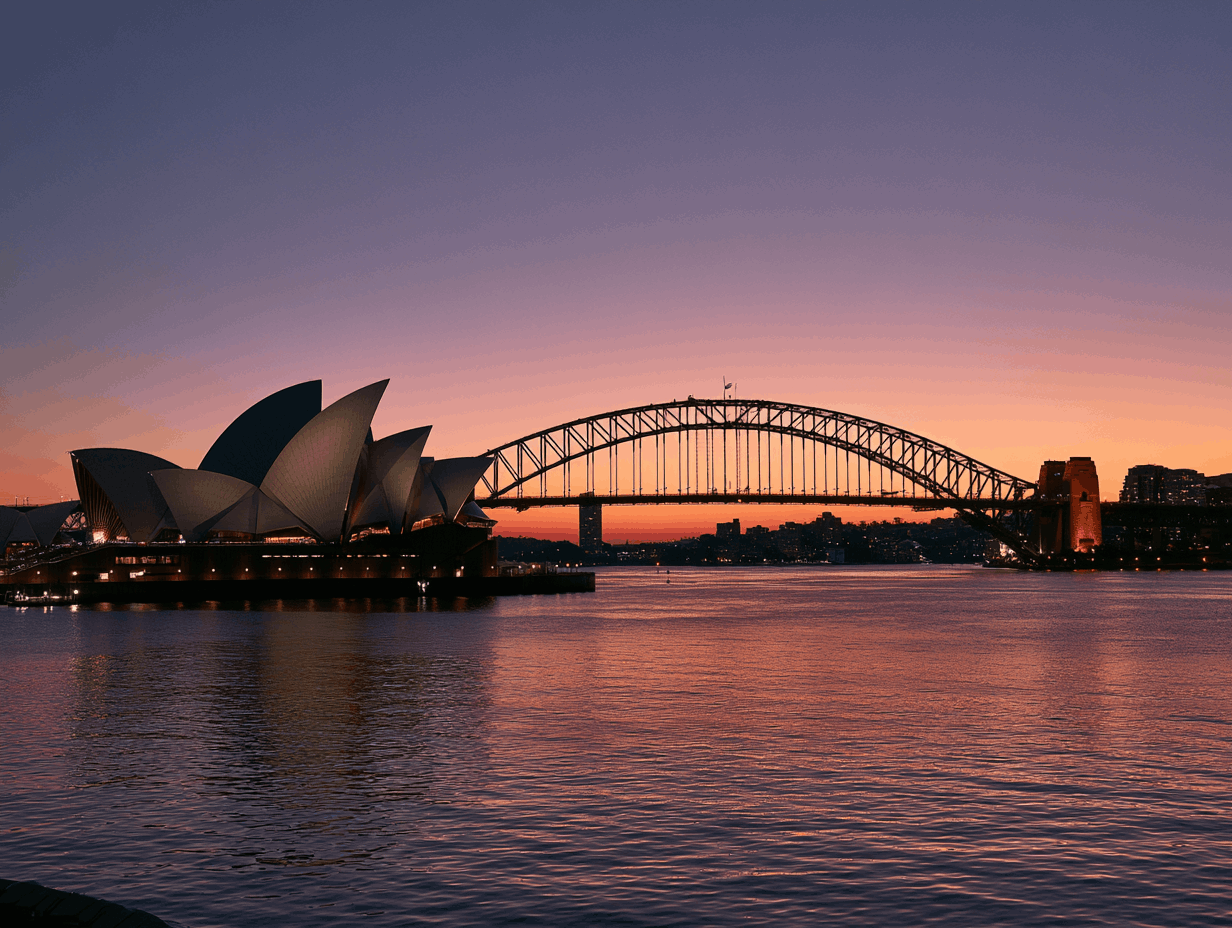
The Sydney Opera House transformed modern architecture and became the defining image of Australia. Its sail like roof design makes it unlike any other performance venue in the world.
Situated beside the harbor, the building appears in countless photographs, travel campaigns, and broadcasts. It is proof that even relatively modern landmarks can achieve worldwide recognition.
Mount Fuji, Japan
Not all iconic landmarks are built by humans. Mount Fuji has become the visual symbol of Japan through its nearly perfect volcanic shape and deep cultural significance.
Artists, poets, and travelers have celebrated the mountain for centuries. Its snow capped peak remains one of the most recognizable natural landmarks anywhere in the world.
Colosseum, Italy
The Colosseum stands as one of the most famous remnants of the ancient world. Built nearly two thousand years ago, it continues to symbolize the power and influence of Ancient Rome.
Its massive arches and partially ruined walls create an image that people immediately associate with Roman history. Even today, it remains one of the most visited landmarks in Europe.
Christ the Redeemer, Brazil
Overlooking Rio de Janeiro from a mountain peak, Christ the Redeemer has become one of the most recognizable statues on Earth. Its outstretched arms create a powerful image visible from many parts of the city.
The monument is both a religious symbol and a national icon. Photographs of the statue with the city and coastline below have helped make it famous worldwide.
Big Ben and the Palace of Westminster, United Kingdom
The clock tower commonly known as Big Ben has become one of the defining symbols of London and the United Kingdom. Its distinctive appearance appears regularly in films, news broadcasts, and travel imagery.
For many people, the tower represents British history, government, and tradition. Even a brief glimpse is often enough to identify it.
Why These Landmarks Matter
The world's most recognizable landmarks are more than impressive structures or beautiful locations. They tell stories about civilizations, cultures, achievements, and shared human experiences. Some were built to honor rulers, some to protect nations, and others simply to celebrate creativity and ambition.
What connects them all is their ability to transcend geography. People who have never visited Paris can identify the Eiffel Tower. Those who have never traveled to Egypt still recognize the pyramids. These landmarks have become part of global culture and continue to inspire curiosity, admiration, and travel dreams.
They remind us that certain places become larger than themselves, turning into symbols that represent entire countries, eras, and ideas for generations to come.