Why It Became Iconic
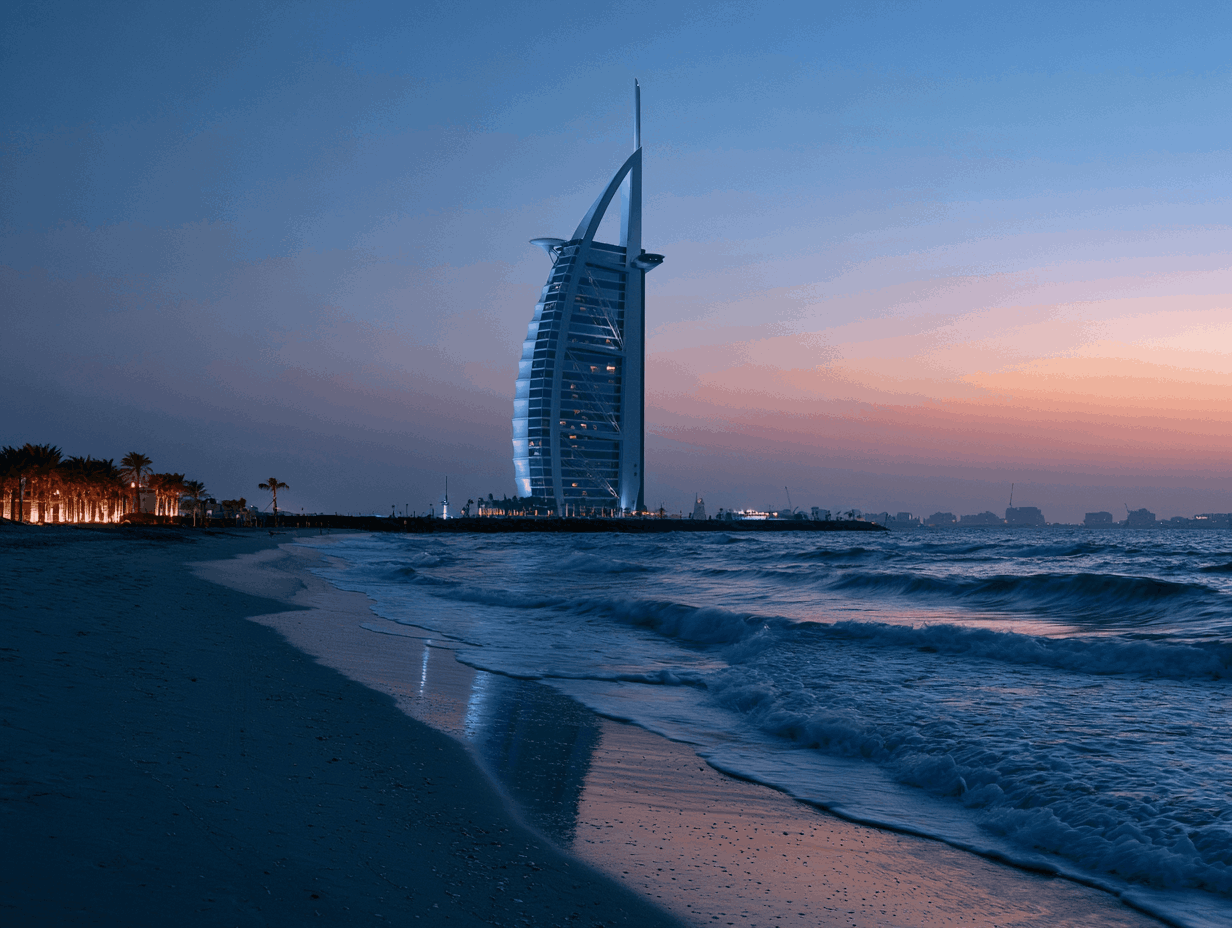
The Burj Al Arab became iconic because it represents the transformation of Dubai from a regional trading city into one of the world's most recognizable destinations. Its distinctive sail shaped design stands out against the coastline and immediately captures attention. While many luxury hotels offer comfort and elegance, the Burj Al Arab was created to be something more - a symbol of ambition, innovation, and confidence. It quickly became one of the most photographed buildings in the Middle East and helped establish Dubai's reputation for creating projects that seem larger than life.
History
The idea behind the Burj Al Arab was to create a landmark that people around the world would instantly associate with Dubai. Construction began in the 1990s during a period of rapid growth and development. Rather than building the hotel on the shore, engineers constructed an artificial island just off the coast, giving the structure an even more dramatic appearance.
When the hotel opened, it attracted international attention for both its design and its level of luxury. The building's unique shape was inspired by the sail of a traditional Arabian dhow, connecting modern architecture with the region's maritime heritage. Over the years it became one of the defining images of Dubai and helped showcase the city's vision for the future.
What To See
The first thing visitors notice is the building itself. Rising above the water, its curved silhouette creates one of the most recognizable skylines in the world. The exterior is impressive from almost any angle, especially when viewed from the nearby beaches or waterfront areas.
Inside, the hotel features enormous atriums, grand staircases, decorative fountains, and lavish interiors that were designed to leave a lasting impression. Large windows provide spectacular views of the coastline and the city beyond. Even people who never stay at the hotel often visit nearby areas just to admire the architecture and photograph the famous structure.
The building becomes particularly striking after sunset when lights illuminate the exterior, creating changing colors and reflections against the night sky. It can look completely different from one evening to the next.
Best Time To Visit
The cooler months between November and March are generally the most comfortable for visiting Dubai. Temperatures are pleasant, making it easier to enjoy outdoor viewpoints and waterfront areas around the hotel.
Early morning often provides clear views and softer light for photography. Sunset is another popular time because the building looks especially dramatic as the sky changes color. Evening visits can also be memorable, as the illuminated facade creates a unique atmosphere along the coastline.
Summer temperatures can become extremely high, though the hotel remains a popular attraction throughout the year thanks to its indoor spaces and modern facilities.
Interesting Facts
The Burj Al Arab was built on an artificial island connected to the mainland by a private bridge. Its sail inspired design was specifically chosen to reflect the maritime traditions of the Arabian Gulf. The structure quickly became one of the most recognizable buildings in the world despite being much younger than many famous landmarks.
Creating the island and supporting the building required significant engineering work because the structure stands directly beside the sea. The hotel's height makes it visible from considerable distances, helping it dominate the surrounding skyline.
Many travelers recognize the silhouette instantly, even if they have never visited Dubai. Thats a rare achievement for any building. Over time the Burj Al Arab became more than a luxury hotel - it evolved into a global symbol of modern Dubai and its determination to pursue ambitious ideas.
The Burj Al Arab became the icon of modern Dubai because it captures the city's vision of innovation, growth, and bold design. Its striking appearance and unique location transformed it into a landmark known across the world. For many people, seeing the Burj Al Arab means seeing the story of Dubai itself - a city that continually reimagines what is possible.