xmjzd-e30f48-cc803c
recig-01b571-586169
Why It Became Iconic
Athens became iconic because few cities have influenced the world as deeply as this one. Long before modern nations existed, Athens was developing ideas about government, philosophy, education, and citizenship that would shape societies for centuries to come. It is often called the cradle of Western democracy because many of the principles that guide political systems today can be traced back to this ancient city. Beyond politics, Athens also became a center for art, science, and intellectual thought, creating a legacy that continues to inspire people around the globe.
History
The history of Athens stretches back thousands of years. The city was already an important settlement long before it reached its golden age, but it was during the fifth century BCE that Athens truly flourished. This period saw the construction of magnificent temples, the growth of democratic institutions, and remarkable advances in philosophy and culture.
Citizens gathered to debate laws and make decisions about public affairs, creating one of the earliest examples of democratic government. Thinkers, writers, and artists transformed Athens into a center of learning that attracted people from across the ancient world. Although wars, invasions, and political changes altered the city over time, its influence never completely faded. The ideas born here continued to spread far beyond Greece and across generations.
What To See
Athens offers an extraordinary mix of ancient history and modern city life. Visitors can explore impressive ruins that have survived for more than two thousand years while also enjoying lively neighborhoods filled with cafes, shops, and local culture.
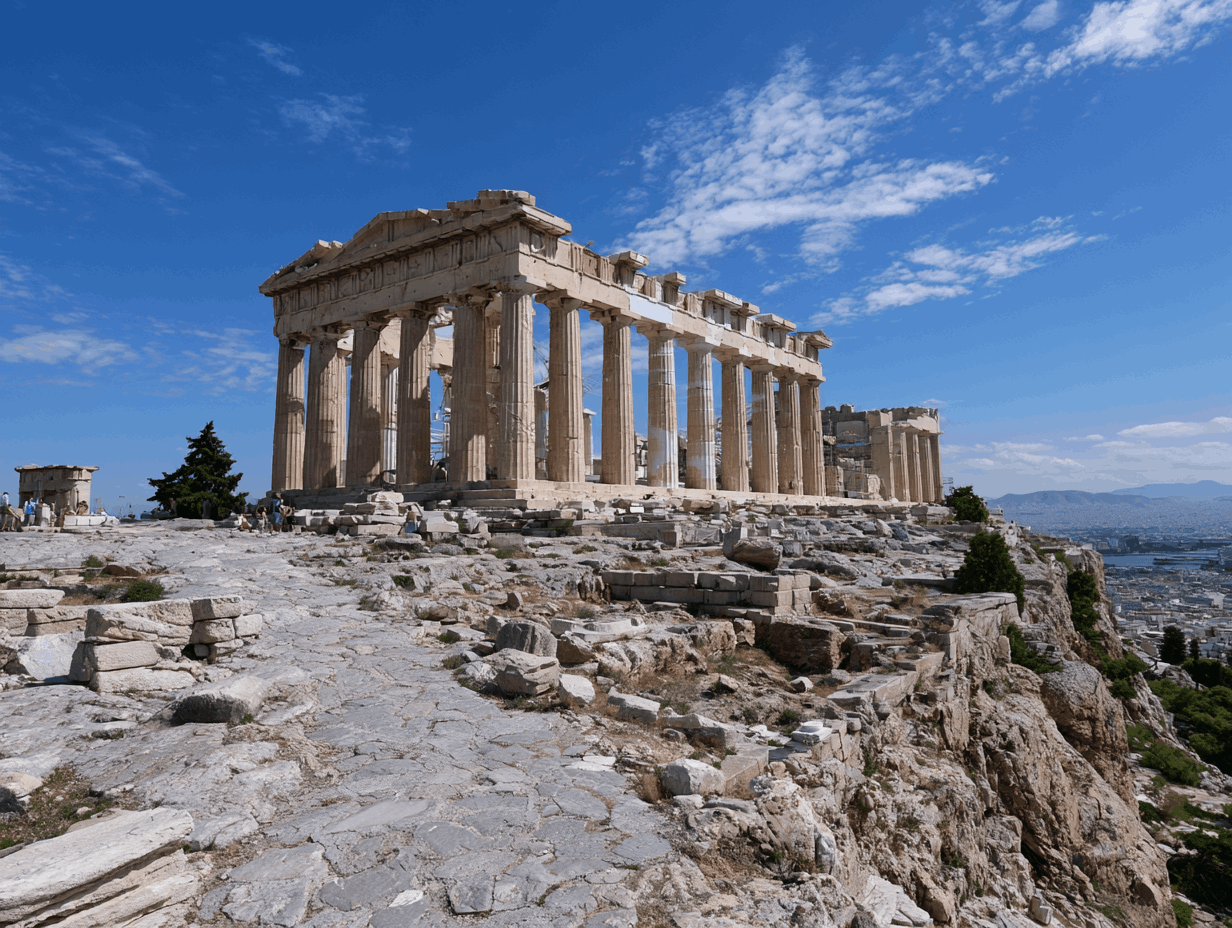
The city's most famous landmarks stand on hills overlooking the surrounding streets, providing spectacular views and a powerful reminder of Athens' historic importance. Ancient temples, theaters, and public gathering places reveal how people lived, worshiped, and governed in earlier times.
Beyond the major monuments, wandering through the older districts can be just as rewarding. Narrow streets, traditional buildings, and hidden corners often create the feeling that history is never far away. Sometimes you can be walking through a modern neighborhood and suddenly come across ruins that are older than many countries.
Best Time To Visit
Spring and autumn are generally the best times to visit Athens. The weather is pleasant, making it easier to explore outdoor sites and walk through historic neighborhoods. During these seasons the city often feels lively without being overwhelming.
Summer brings long sunny days but temperatures can become very high, especially around exposed archaeological sites. Winter is cooler and usually quieter, offering a more relaxed experience for visitors who prefer smaller crowds. Even during the cooler months, many days remain comfortable for sightseeing.
Interesting Facts
Athens is one of the oldest continuously inhabited cities in the world. People have lived in the area for thousands of years, creating layer upon layer of history beneath the modern streets. Archaeologists continue to discover ancient structures and artifacts that reveal new details about the city's past.
The city played a major role in the development of democracy, although the system was very different from those used today. Public debates and citizen participation were important parts of civic life. Athens also became famous for its schools of philosophy, where thinkers explored questions about ethics, knowledge, government, and human nature.
Many concepts that seem ordinary today were once revolutionary ideas discussed in Athens. Some of those debates are still relevant, which is kind of amazing when you consider how much time has passed. The city's influence can be seen in modern political institutions, educational systems, architecture, and cultural traditions throughout much of the world.
Athens earned its place as the cradle of Western democracy because it helped shape the foundations of politics, philosophy, and culture that continue to influence society today. Its ancient monuments are impressive, but the city's greatest legacy may be the ideas that emerged from its streets and public squares. Visiting Athens is a chance to stand where some of history's most important conversations first began, and where their impact can still be felt centuries later.